

Everyone approaches work differently. How we communicate, set priorities, and make decisions varies from person to person. When teams understand both their shared habits and their differences, they can collaborate more effectively and achieve better results together.
But how can team members and leaders understand the factors that shape how they work?
Team DynamicsSM in the Aperian platform makes these patterns visible. It provides an easy and accessible way for teams to understand how they interact, spot potential friction points, and uncover opportunities to collaborate more smoothly.
Let’s take a look at three common team challenges and how Team Dynamics can address them.
One of the most important aspects of teamwork is communication. In team settings, being aware of each person’s communication style helps to establish expectations and start collaboration off strong.
Take, for example, a project team at a global pharmaceutical company tasked with launching a new product in key markets.
In their early meetings, it starts to become clear that Chris, Leon, and team leader Anke, are comfortable speaking up in meetings with their thoughts and opinions on different ideas. The other team members, Sophie and Ravi, don’t voice any disagreement, so the team leader assumes everyone’s aligned.

However, when looking at their team dynamics, it’s clear that Chris, Anke, and Leon tend to be more direct than Sophie and Ravi. These two team members have important perspectives, however their way of communicating means they are less likely to openly voice disagreement in a fast-paced meeting than in individual conversations or via email.
This is useful information for everyone to know. The team leader can structure meetings and various communication channels to make sure everyone can share their views. This might include sending discussion prompts ahead of time, using smaller breakout discussions, or following up with written questions or in one-on-one settings. Additionally, team members can flex their styles with one another in order to communicate more effectively. Team Dynamics provides personalized strategies to help with this.
Accommodating all communication styles allows teams to leverage a wider range of perspectives and ensures that all voices are heard, rather than assuming agreement based only on who speaks up.
While it may initially seem like a benefit for team members to share a style preference, it can end up being a limitation.
Let’s look at the product launch team as they begin developing go-to-market strategies for various regions. They are focused on thorough planning, strong execution, and risk mitigation. However, their ideas for market entry feel stale.
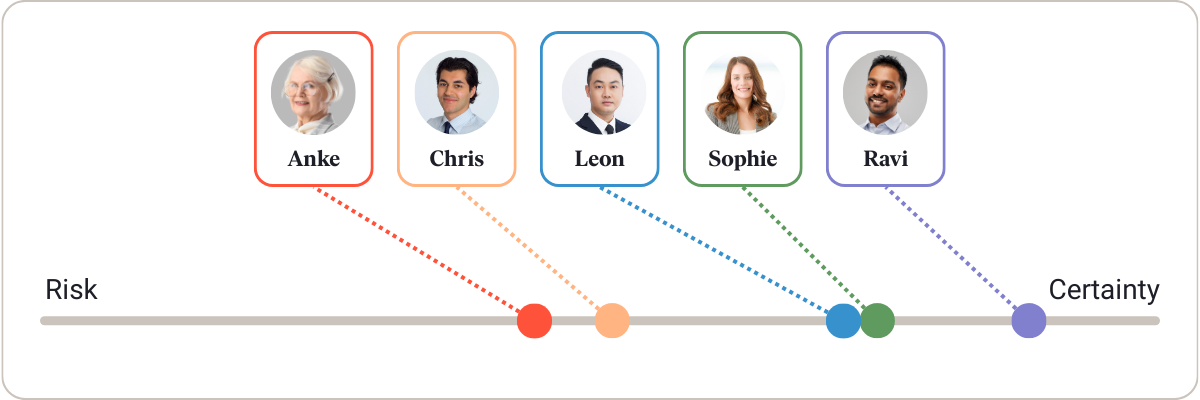
In looking at their team dynamics, it’s clear that the team shares a similar approach to risk. While this shared style supports thoughtful decision-making, it also highlights that the team may be missing opportunities to experiment or challenge assumptions.
With this awareness of their shared style, the team can intentionally create opportunities to experiment with new ideas and can also consider bringing in external perspectives to provide fresh thinking and help them experiment with different approaches.
In the team’s next phase of the project, it becomes clear that the team members differ in how they want to work. Most team members begin executing their tasks on their own, providing updates during regularly scheduled meetings. However, Chris has different expectations for how they should collaborate.
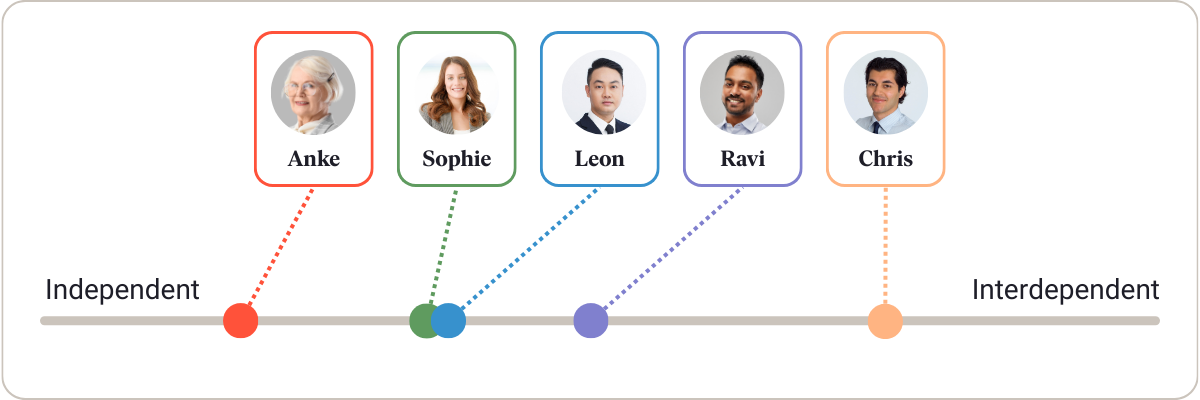
Their team dynamics reveal that Anke, Sophie, and Leon prefer working independently, focusing on their individual responsibilities and deliverables. While Ravi doesn’t have a strong preference between working independently and interdependently, Chris does prefer working collaboratively and often comes up with great ideas and produces great work when he’s engaging with others.
Recognizing this, the group can build in co-working sessions, collaborative check-ins, and other communication channels to ensure Chris, Ravi, and all members of the team have opportunities to connect with one another and work in a way that suits their style.
While these moments help people like Ravi and Chris express their perspectives, they also tend to bring out new ideas and lead to “a-ha” moments that the team might otherwise miss out on.
These three situations show how team dynamics influence communication, decision-making, and execution in very real ways. The value is not in labeling teams or individuals, but rather in creating shared awareness and implementing strategies that help all team members contribute their best.
By exploring their team dynamics, teams gain a clearer picture of how they work together and receive targeted advice on how to adapt. Learn more about Team Dynamics, and reach out to the Aperian team for a personalized demo of this team experience.