

Wherever your organization is in the globalization process, it’s crucial to ensure that leaders, teams, and employees are set up to succeed. We have worked with and surveyed hundreds of companies headquartered in every major world region, and have identified five common pitfalls along the path to expanding global operations.
These pitfalls are important to recognize whether your company is just starting to globalize and wants to incorporate best practices from the beginning, or if you are already working in multiple countries and seek to diagnose and resolve conflicts or failures to better meet key objectives. Below, we explain each challenge and offer at least one step you can take to address it.
Employees at all levels are usually promoted and rewarded based on prior success. They have developed established patterns of thinking and acting that enable them to get things done in their home market environment. It is natural (and easy) to assume that these same patterns will produce good results elsewhere. However, as decades of research and hard-won experience have demonstrated, numerous factors—cultural, regulatory, logistical, geopolitical—tend to vary considerably from one global location to the next.
Here is a sample dialogue among team members with shared backgrounds that occurs all too often, and which can set in motion a string of negative consequences.
“We know how to do this. Our latest product has done well here at home, and it’s likely that customers in other markets will see its value as well. We can schedule the rollout and tweak it as we go. It will be faster to figure things out along the way.”
It is also tempting to assume that the same team leadership style or set of headquarters-based operating norms will work just as well for an expanded global team (e.g., “Whoever has an idea or a problem should just speak up!”) or that limited consultation with global team members will be sufficient: “We just don’t have the bandwidth to ask for input from team members in every region.”
The “Success Trap” challenge is most keenly felt by expatriate managers who discover that they must balance their prior experience and assumptions with sometimes painful adaptation to new circumstances. A common indicator of international assignment failure is the manager who is working very long hours to complete tasks on their own because local employees, who are actually much more in tune with the country’s business environment, seem incapable of adapting to the expatriate’s requirements.
Everyone involved with globalization efforts—top executives, global team managers and members, learning leaders—must instill the discipline of assuming that business settings are quite likely to vary in large or small ways from country to country, and it is critical to systematically invite the unexpected. This shift is similar to what the behavioral economist Daniel Kahneman refers to as the transition from habitual, automatic System One thinking to the slower and more attentive System Two. System One, although highly efficient, is subject to confirmation bias, or seeing what we expect to see, and works best in familiar settings. System Two enables us to more readily absorb novel information and even reject our initial intuitive reactions to formulate a different and more suitable response to unfamiliar circumstances.
Many people are aware of the now-famous experiment in which observers are instructed to count the number of times a basketball is bounced between a set of actors on stage. While busily engaged in the familiar task of counting, a substantial percentage of observers fail to see the person in the gorilla costume who walks across the same stage and beats their chest before departing. The “gorilla” often missed by a System One approach could be an unfamiliar customer, competitor, disruptive technology, regulator, price standard, service expectation, supplier, infrastructure constraint, social issue, or leadership style.
Here are a few ways for teams to encounter what they were not expecting:
Employees far from headquarters, even those at the highest executive levels, can easily feel like they are “less than” those located in the organization’s home country. Language and time zone differences accentuate the feeling of remoteness while making communication and consultation more difficult. Conflicts and misunderstandings may fester, and organizations are unable to benefit from good ideas that remain unsolicited or unrecognized.
The “Headquarters Imperative Syndrome” embodies this dynamic, which can exist organization-wide or within the context of a single team; it is frequently exacerbated by the “Success Trap” described above. Well-intended ideas and initiatives launched from headquarters encounter but ultimately disregard local pushback regarding market fit or subsidiary capabilities, creating a cycle in which employees abroad feel disempowered and disconnected from key strategic efforts.
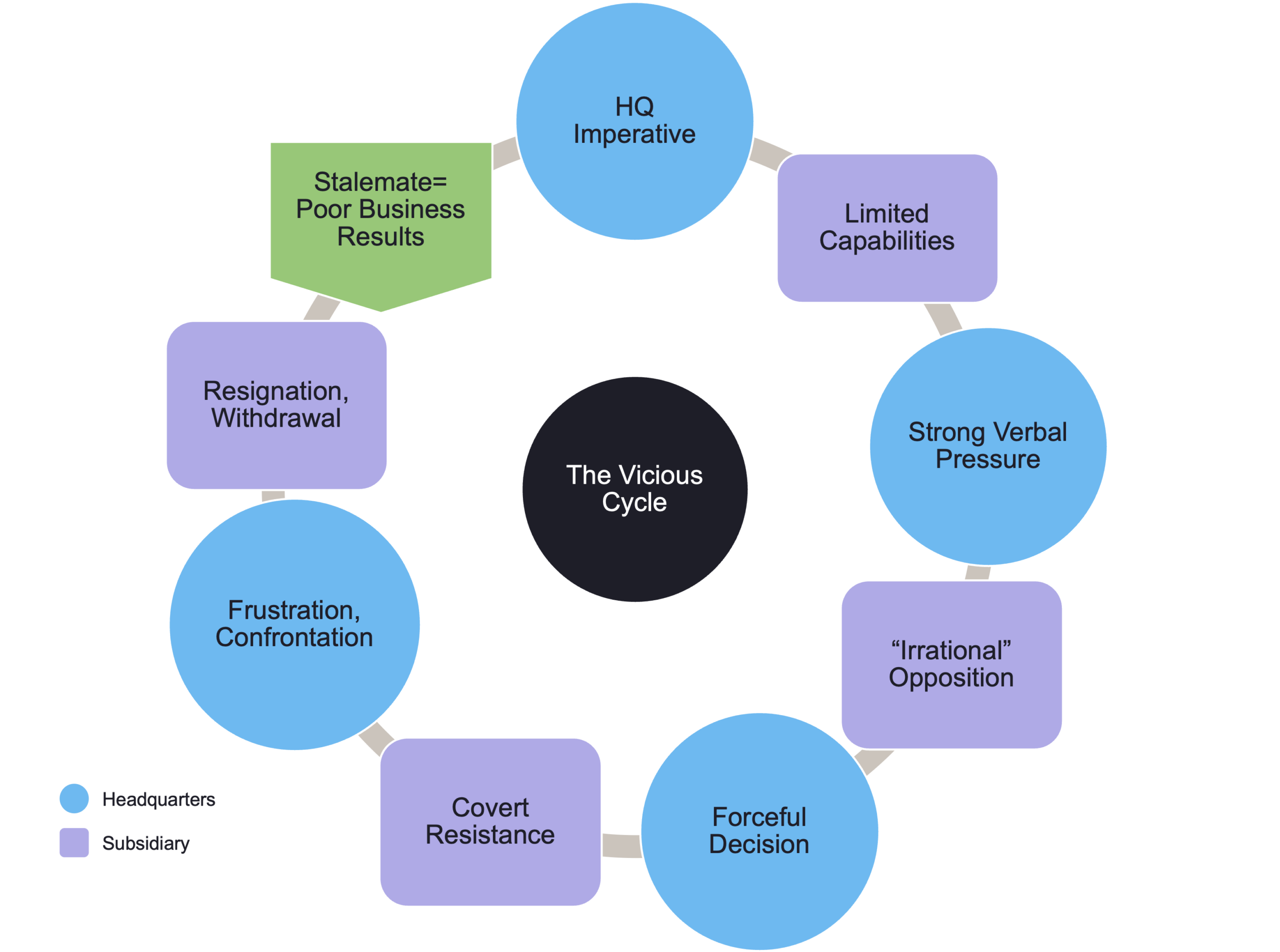
Skillful team leaders and managers know that workplace inclusion is closely linked with employee engagement. Workers who are fully engaged are more likely to stay with the organization and to go the extra mile to get things done. Most employees, regardless of their location, seek workplace opportunities to grow and prosper. Just like people at headquarters, those located remotely will have a stronger sense of belonging, loyalty, and commitment to their firms when they are included in key work activities (communications, meetings, decision-making, project planning, problem-solving). No employee wants to feel excluded or treated as a second-class citizen. However, in-group vs. out-group dynamics and the related sense of exclusion among those perceived as outsiders are a perpetual challenge. We naturally pay the most attention to those who are in the closest proximity within the same building, function, or team.
On the day-to-day operational level, there are several steps organizations and team leaders can take to create larger in-groups that help bridge boundaries of various kinds. Learning leaders are well-advised to make these steps a regular part of their efforts to disseminate best practices across their organizations.
As companies globalize, matrix structures are established to manage various parts of the operation. When they are managed well, such structures ensure that different perspectives are represented in strategic planning and decision making, generating healthy tensions that drive innovation.
At the same time, these increasingly complex structures strongly impact subsidiary employees and global teams. A subsidiary executive in baseball-loving Japan once described his experience in a multinational enterprise headquartered abroad: “It’s like there are many pitchers and one catcher, and I am the one catcher!” He went on to explain that on a given day, he might receive requests, directives, or questions from half a dozen counterparts at headquarters or other locations working in matrix roles that did not exist within his own small organization. The people reaching out to him did not realize he was being peppered by so many inquiries, with limited time and resources to respond.
Subsidiary employees are often torn between responding to their own country or regional leadership and other solid or dotted-line global counterparts from functions, business units, or product groups who all want to enlist their support.
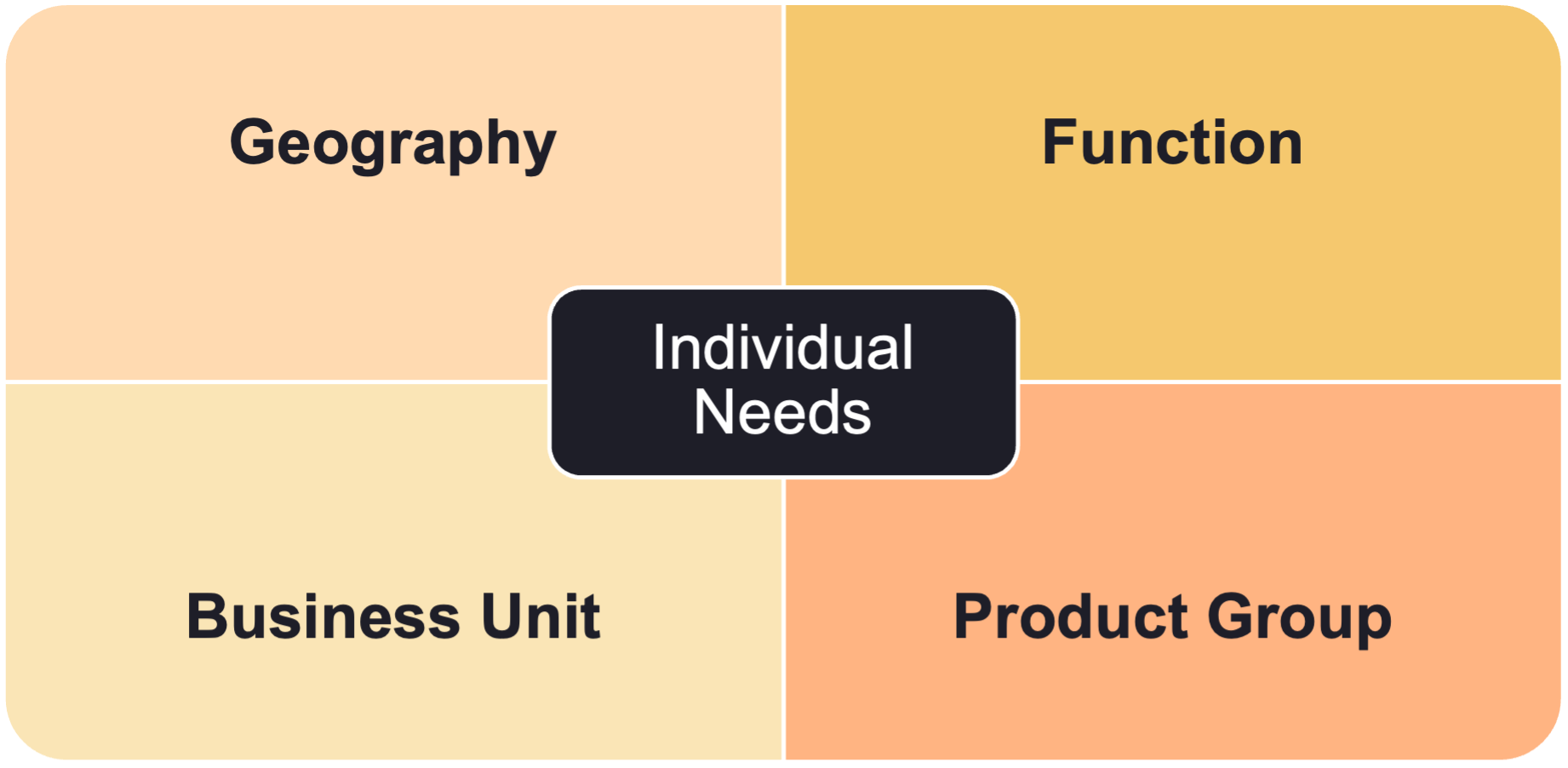
Global teams with members representing different matrix elements are likely to feel the effects of competing priorities most acutely. The same team could include, for example, members of separate functions (such as product development, marketing, and finance) and employees from various geographies. The pull of separate reporting relationships, metrics, customer demands, and organizational priorities can undermine trust within the team, leading to friction and subpar team performance even when everyone is working hard to accomplish their goals.
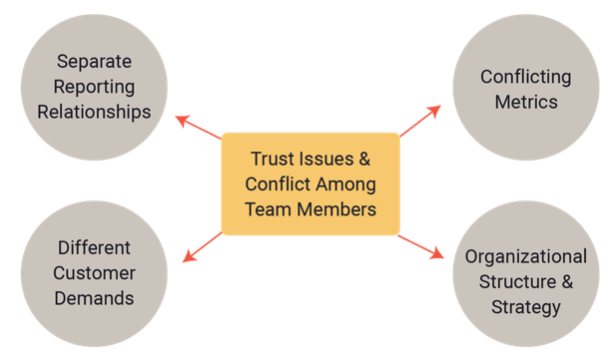
To avoid creating matrix gridlock due to competing priorities, we recommend that executives, team leaders, and team members seek alignment based on the following questions:
Research indicates that global teams are more likely to fail than more homogeneous teams. They frequently excel at “divergence”—generating creative ideas and proposals—but struggle with “convergence”—establishing a common process for making decisions together and implementing them effectively.
Multicultural teams must bridge contrasting work styles, which can include surprisingly different attitudes towards everyday activities such as meetings. Participation norms for meetings vary globally, and teams need help decoding them before misunderstandings arise and they are unable to progress through Tuckman’s well-known group development stages of forming, storming, norming, and performing. Many global teams remain mired in the “storming” stage, whether or not this is acknowledged explicitly. Reticence among remote employees, especially during virtual meetings, is often mistaken for agreement when it may instead indicate language challenges, insufficient time to prepare, caution about expressing views in a group forum, or silent disagreement.
A first step to unraveling potential misunderstandings is to understand how team members’ work-style preferences vary and establish ways for everyone to adapt to improve working relationships. This means integrating styles that are more independent or interdependent, egalitarian or hierarchical, risk or certainty-oriented, direct or indirect, or focused initially on tasks or relationships. For instance, more independent team members might prefer to accomplish particular tasks or solve problems on their own, while those who are more interdependent prefer to work as part of a sub-group—a culturally savvy team leader could offer both options.
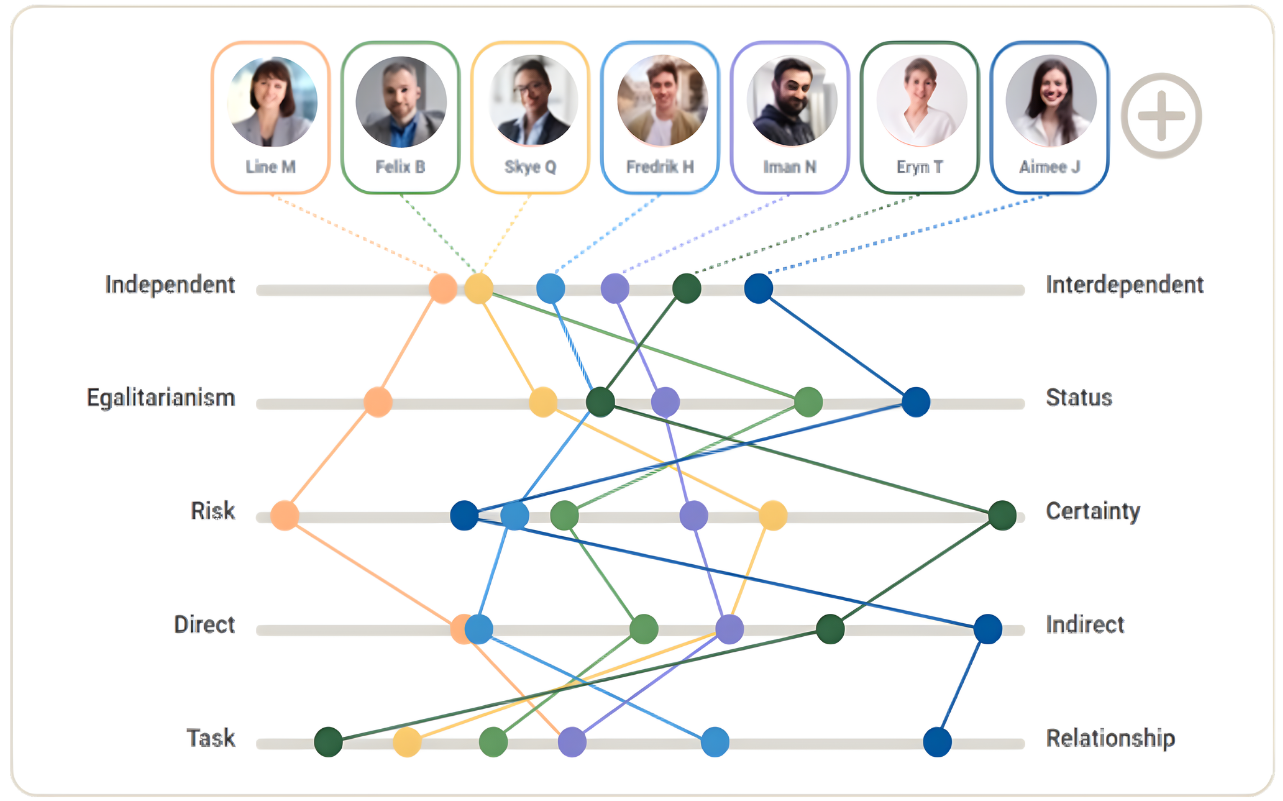
Interactions among global team members are also normally carried out at a distance, and it is vital for each team participant to be able to contribute to the best of their abilities through virtual technology. One way to make meetings more inclusive is to invest substantial time beforehand, giving those who are more certainty-oriented plenty of time to prepare. Another way to elicit contributions from remote meeting participants is to establish well-defined norms for participation, such as pre-assigned roles, turn-taking, asking for written input, small-group discussions, and the use of simultaneous translation technologies. Experienced learning leaders make multicultural meeting facilitation practices a core component of their global curriculum.
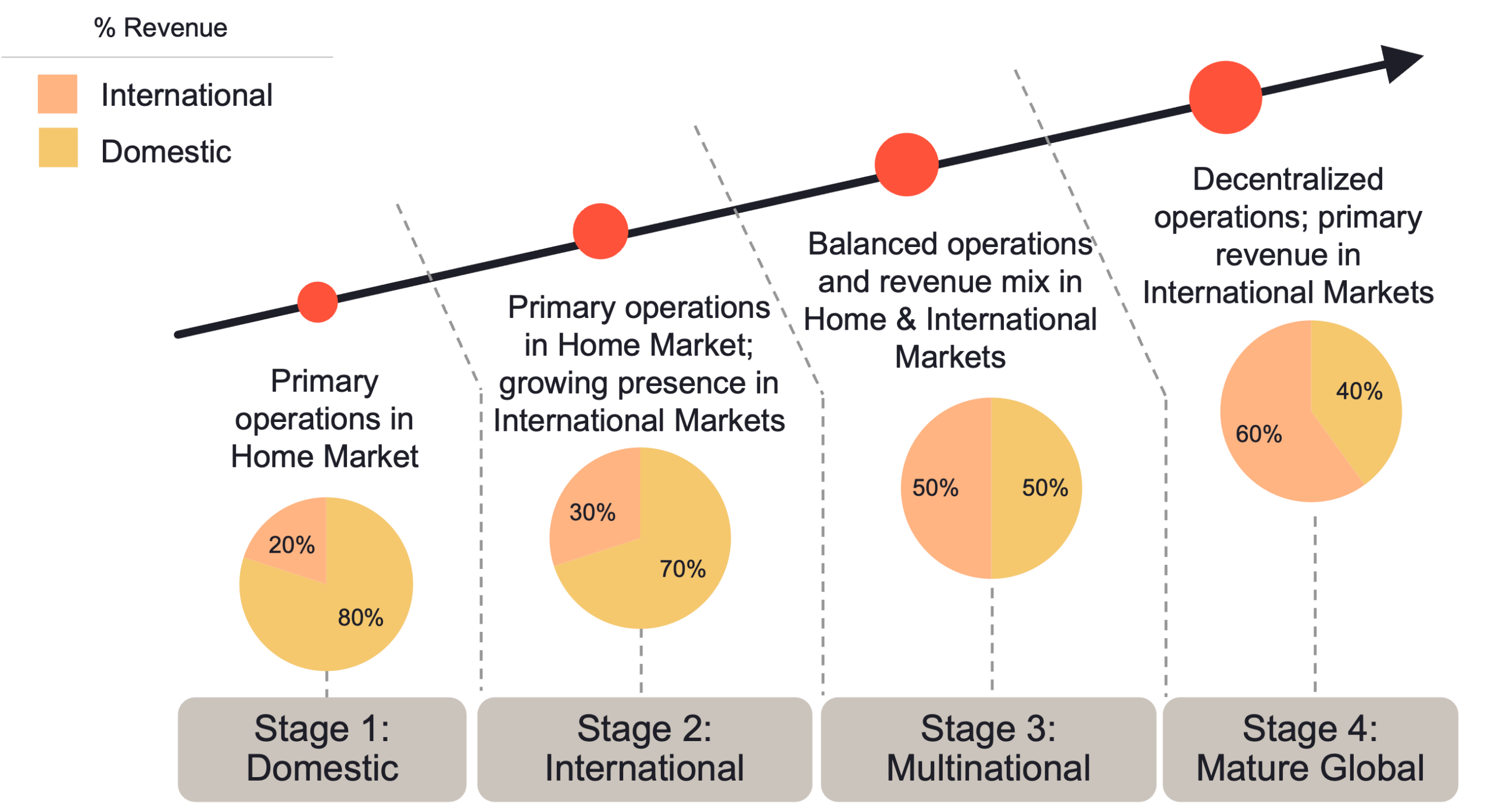
Expanding global organizations evolve through a number of stages, with a changing balance between centralized and decentralized operations. There is considerable variation by industry, and not every enterprise will have the same ultimate goal. For example, the relatively decentralized structure of a firm at the “mature global” phase is more suitable for a consumer goods company than for a “multinational” hi-tech firm that makes significant investments in centralized research and/or manufacturing sites. Attractive opportunities to grow the business may be either widely available across different regions or concentrated in just a few global markets.
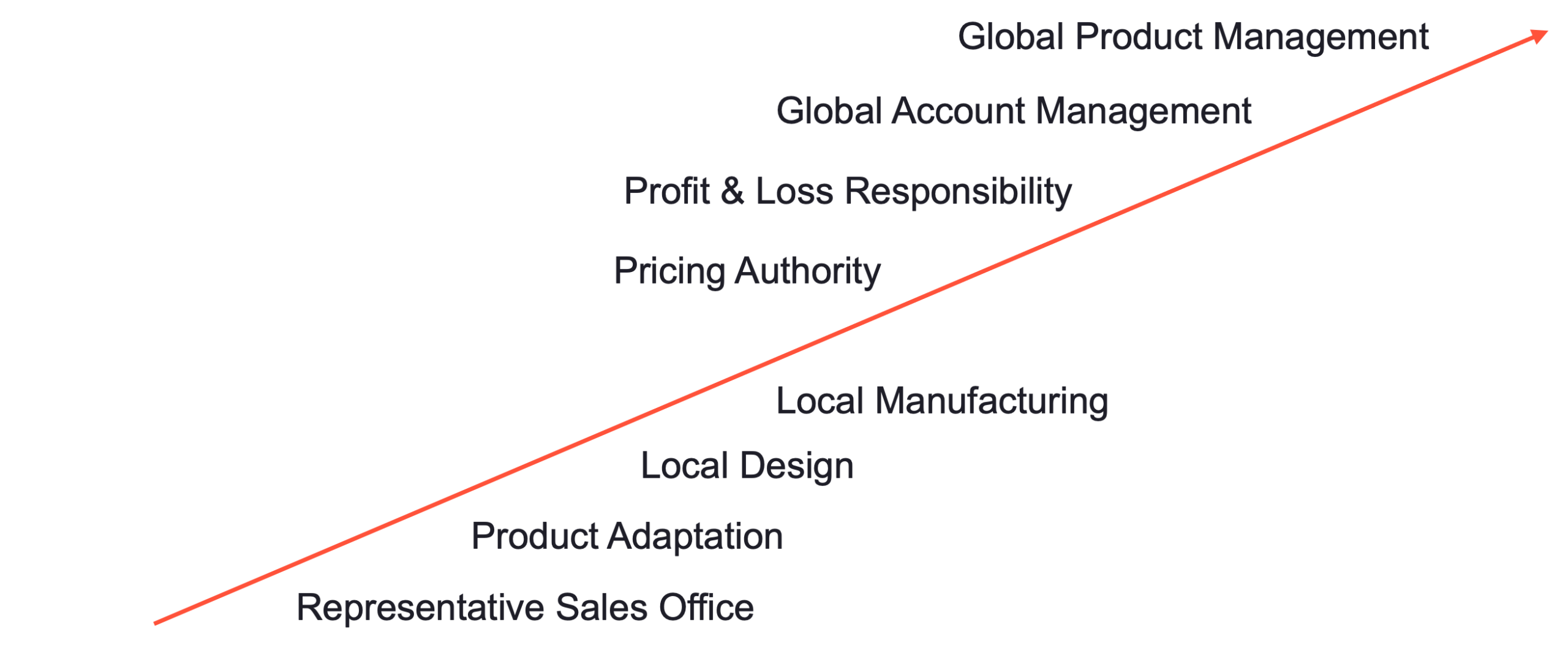
Regardless of industry characteristics or growth prospects, however, the common denominator over time is change, and it is important for employees in all locations to be prepared. Setting up a representative country sales office is often the first outpost of a company just beginning to globalize. This can very quickly lead to requests for product adaptations to fit local regulations and customer needs, or even to proposals for locally based design and manufacturing. Pricing initially set on a global basis may give way to greater pricing flexibility and subsidiary P&L responsibility. Longer-term, it could make sense for account or product managers to be located in countries where major customers are headquartered.
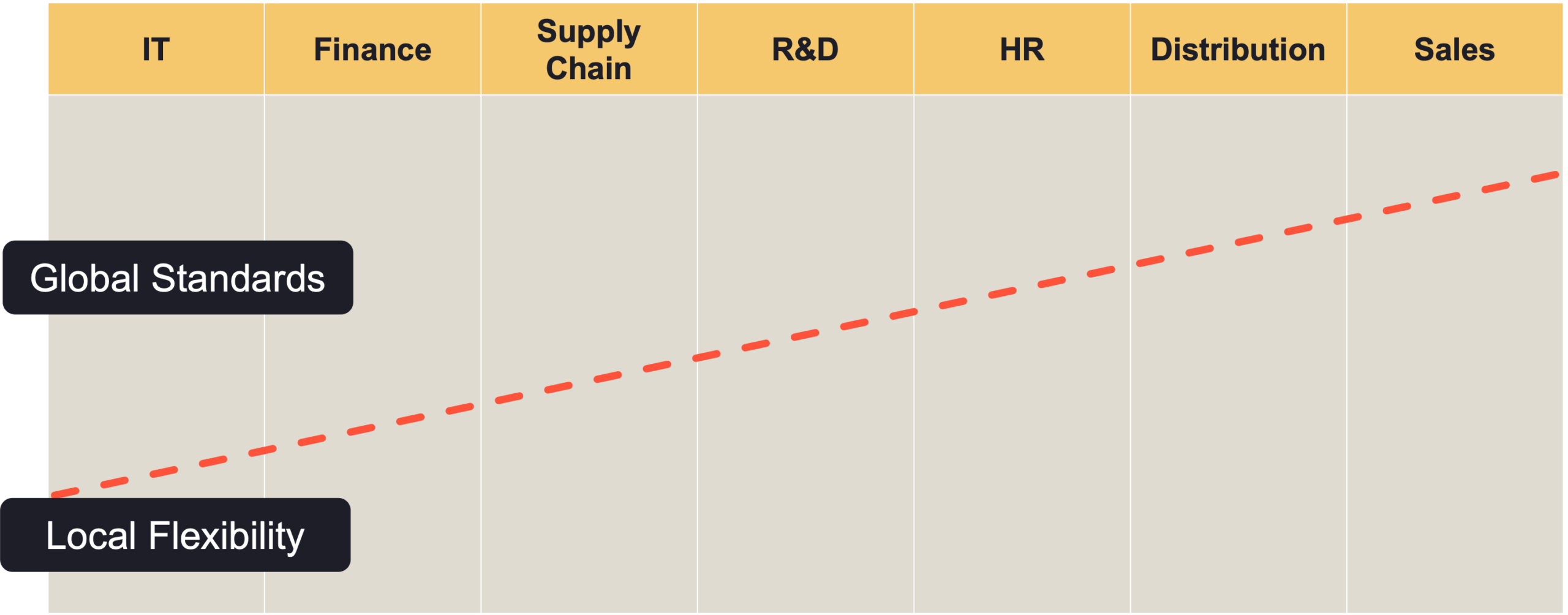
The optimum balance of global standards and local flexibility also varies by function. IT and Finance, for instance, with their requirements for unified platforms and tight security, will probably need to be more centralized than sales operations, which must cater to local customer needs.
Organizations stumble when their employees are too far behind or ahead of the globalization change process. A person at headquarters could have an outmoded sense of increasing subsidiary capabilities and make top-down decisions that demotivate local employees and are not a good fit with market conditions. Meanwhile, subsidiary personnel may chafe at restrictions from headquarters and want to make their own choices or contract with local vendors even though centralized operations are more efficient. When global team members are influenced by such divergent perspectives, these tensions can lead to conflict.
Every company needs to balance global efficiency with local responsiveness on an ongoing basis, and this can only be accomplished through regular knowledge exchange about customer needs, regulations, and evolving technologies. The delegation of increasing authority to subsidiaries requires a “Goldilocks” formula of the right amount of authority to fit the current situation. Delaying delegation to capable and ambitious subsidiary employees can lead to suboptimal performance and poor retention rates, but another mistake is to delegate more tasks and responsibilities than local employees can realistically handle. It is better to move step by step from more centralized to more decentralized authority than to delegate too much too soon and then have to pull back.
A realistic assessment of an organization’s current globalization stage, along with a shared vision of how it can evolve, can go a long way toward alleviating natural growing pains. Subsidiary employees who aspire to larger roles are more willing to be patient with headquarters-driven imperatives if they foresee future opportunities to move beyond receiving direction to become a full-fledged team member, and perhaps eventually take on higher leadership positions themselves. Headquarters representatives who combine their day-to-day focus on getting through their current task lists with a sincere commitment to subsidiary and employee development are more likely to enjoy collaborative global team settings, including candid conversations about urgent issues.
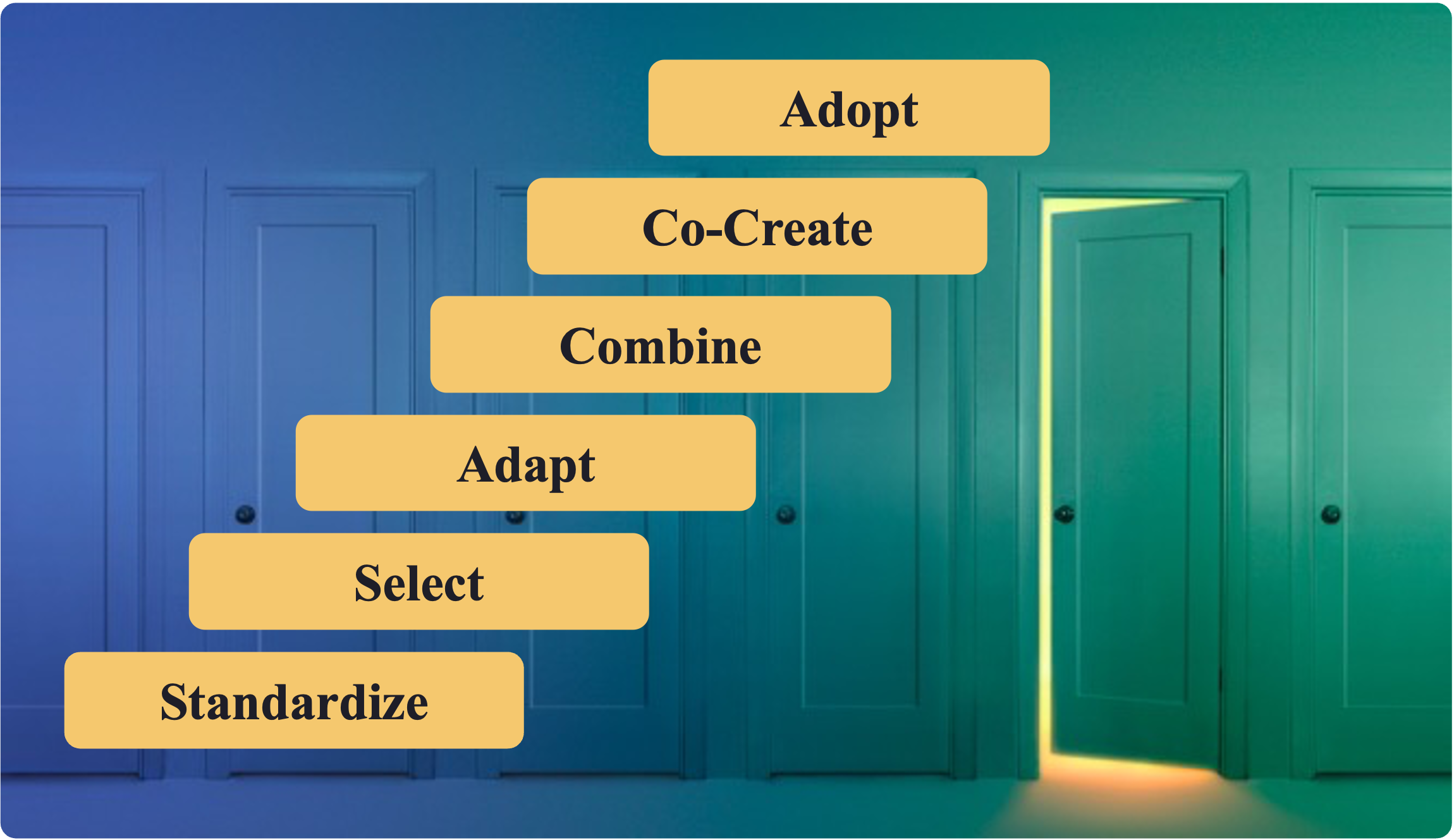
Deliberate flexibility in arriving at solutions is another way to catalyze effective teamwork and high performance. Although exporting products and systems from headquarters might be the most natural choice as a firm begins to expand operations beyond its home country, a fuller range of options includes:
When every global employee knows that their goal is to achieve the best possible solution for the organization and its customers, regardless of their point of origin, they participate enthusiastically and share a sense of pride and ownership.
Executives and teams that proactively anticipate, diagnose, and avert or mitigate common pitfalls of globalization gain a significant competitive advantage. Each of the five pitfalls outlined above is linked with both tangible and intangible outcomes. It is relatively easy to attach a measurable value to results such as increasing or decreasing market share, higher or lower global team performance, project deadlines that are met or missed, and talented employees who choose to stay or leave the organization.
Underlying such specific, quantifiable outcomes, however, are far greater potential costs or benefits. There is an almost unlimited price to pay for constant friction, miscommunication, working at cross-purposes, and failing to realize strategic objectives that are achievable yet continually out of reach.
On the other hand, alignment around a shared vision for the future, constant mutual learning, and flexible adaptation over time produce much more favorable outcomes. Major benefits include early identification and leveraging of global opportunities, innovative and efficient teamwork, timely and well-informed decisions, and lasting cross-border friendships.
—
Discover how Aperian helps organizations strengthen global collaboration, reduce cross-border friction, and improve team performance through expert-led learning experiences and in the Aperian platform. We’d love to talk about how we can help your teams reach their goals.