
Employee engagement metrics have become a standard part of workforce strategy. Organizations rely on engagement surveys, pulse checks, and eNPS (Employee Net Promoter Score) to understand employee experience and identify areas for improvement.
There is value in that data. Engagement scores can reveal patterns, highlight areas of concern, and help leaders track changes over time.
What they can’t do is explain the everyday interactions that shape those results.
A survey may reveal that collaboration scores have declined, employees feel less connected to their colleagues, or trust in leadership has weakened.
Those findings are important, but they only tell part of the story.
They describe an outcome without providing much insight into the behaviors, assumptions, and team dynamics that produced it in the first place. By the time the results are analyzed and shared, the issues affecting performance have often been present for months.
For managers leading global, hybrid, or cross-functional teams, that delay can create a significant cycle of negative experiences. Knowing engagement is declining is useful. Understanding why is what enables meaningful action.
When organizations discuss employee engagement metrics, the conversation often centers on annual surveys, quarterly pulse checks, and eNPS. These tools have become the default answer to the question of how to measure employee satisfaction.
The challenge is that all of them are retrospective by design.
They capture how employees felt after a series of experiences has already occurred. They can tell leaders that collaboration is suffering or that employees feel disconnected, but they rarely provide enough context to understand what is happening within individual teams.
Survey data also depends on employees’ willingness to share candid feedback. Even when surveys are confidential, employees may question how anonymous their responses really are, especially in smaller teams or organizations where comments can seem identifiable. Combined with cultural differences in how people express disagreement or criticism, this can result in feedback that is more cautious than employees’ actual experiences. As a result, leaders may see the symptoms of a problem without getting an accurate picture of what’s driving it.
Imagine a global team working across multiple regions. Survey results show a decline in collaboration and communication scores compared to the previous quarter. At a high level, the data suggests there is a problem. What it doesn’t reveal is whether the issue stems from unclear decision-making, competing priorities, communication misunderstandings, or differences in expectations about how work should be coordinated.
For HR business partners and people leaders, that distinction matters.
A drop in engagement may appear to be an organizational issue when the real challenge exists within a single team. Likewise, a decline in collaboration scores may have less to do with workload or resources and more to do with how team members communicate, share information, or make decisions together.
This is one reason engagement data can be misleading when viewed in isolation. High-level metrics are useful for identifying trends, but they are not designed to diagnose the day-to-day friction that affects team performance. By the time those trends become visible, projects may already be behind schedule, relationships may be strained, and employees may have spent months working around problems that were never fully understood.
Most employee listening strategies are effective at answering one question: What is happening?
They are far less effective at answering the question managers care about most: Why?
A decline in collaboration scores, for example, might suggest poor communication. Lower psychological safety scores may point to employees feeling uncomfortable speaking up. Those interpretations aren’t necessarily wrong, but they don’t explain the day-to-day interactions producing those outcomes.
A team member may feel excluded because communication styles differ. A manager may believe they’re encouraging open dialogue while some employees interpret direct challenges very differently.
A manager who believes they are encouraging open dialogue may not realize that some employees interpret direct challenges in meetings very differently than others do.
In distributed teams, regional norms, national culture, organizational culture, and individual work-style preferences can all influence how people participate, provide feedback, and contribute ideas.
From the survey’s perspective, these situations may all look the same: engagement is down
From a manager’s perspective, they require very different responses.
Without additional context, leaders are left trying to connect the dots themselves. They know something is affecting collaboration, trust, or team effectiveness, but they don’t have visibility into the underlying dynamics. As a result, solutions are often based on assumptions rather than evidence.
That uncertainty is where many engagement initiatives lose momentum. Organizations collect data, identify trends, and discuss results, yet the root causes often remain unclear because the day-to-day behaviors shaping those results were never measured.
The GlobeSmart Profile helps managers uncover underlying dynamics by giving team members insight into how they prefer to communicate, collaborate, and get work done. Instead of waiting for the next survey cycle, managers can use the Profile to identify sources of friction, start more productive conversations, and create stronger alignment across the team. The Profile is designed to help individuals and teams build trust, reduce conflict, and improve collaboration by increasing awareness of different work styles.
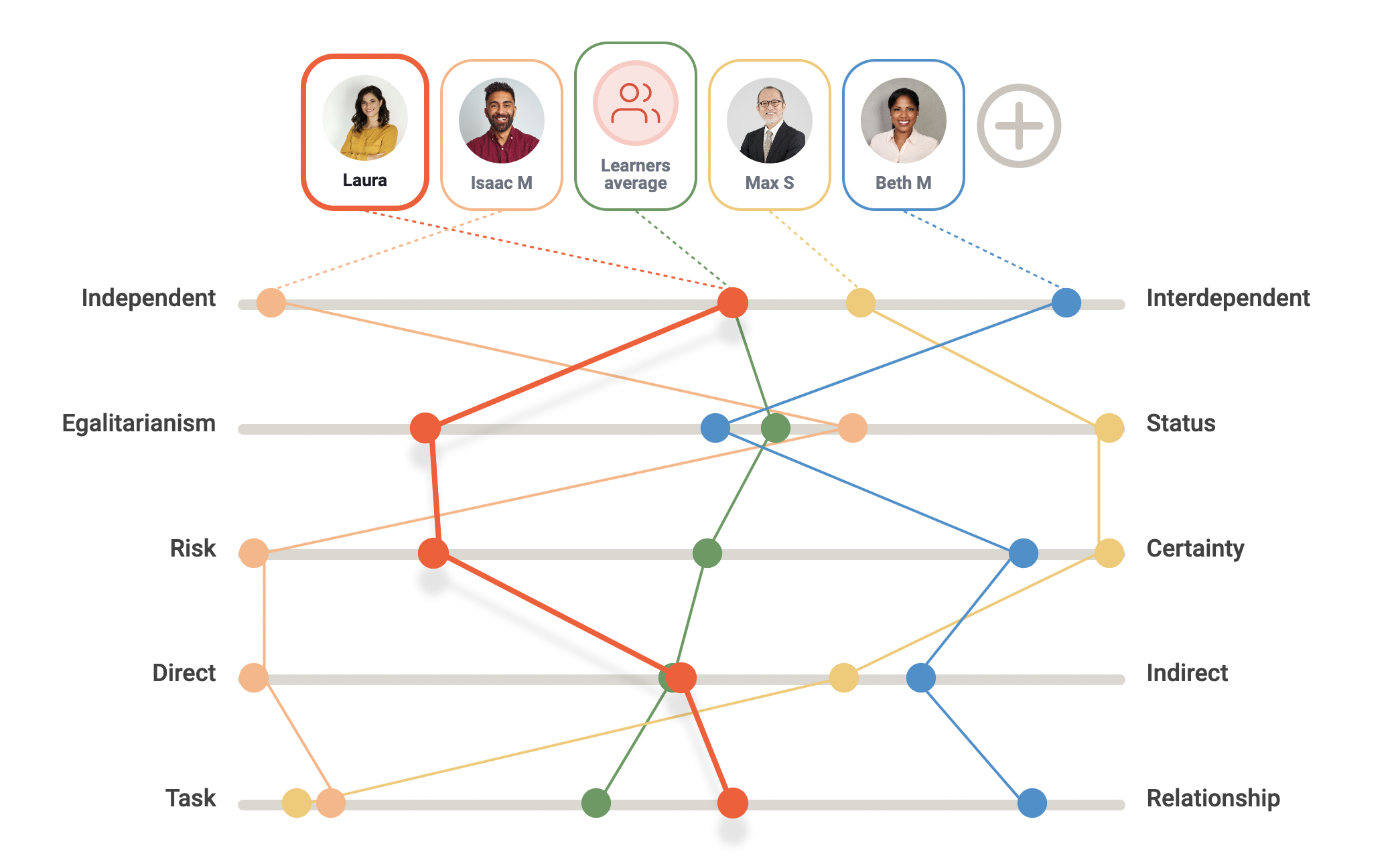
For organizations looking to move beyond engagement scores and understand what’s driving them, it provides practical context that surveys alone cannot deliver.
Learn more about the GlobeSmart Profile and how it helps teams work better together.
Employee engagement metrics are designed to identify broad trends across groups of employees. While they can highlight areas of concern, they typically do not capture the specific interactions, communication patterns, or work-style differences affecting individual teams. As a result, managers often know there is a problem without understanding what is causing it.
eNPS can provide useful insight into overall employee sentiment, but it offers limited visibility into the factors influencing those perceptions. Teams may be struggling with collaboration challenges, communication breakdowns, or decision-making friction long before those issues appear in eNPS results.
Organizations do not need to abandon engagement surveys, but they should complement them with tools that provide greater insight into team behavior. Solutions such as the GlobeSmart Profile help managers understand how employees communicate, collaborate, and make decisions, making it easier to identify and address sources of friction before they begin affecting engagement scores.
Yes. Teams can report relatively high engagement while still experiencing communication challenges, decision-making bottlenecks, or unresolved conflict. Engagement metrics provide an important perspective, but they should be considered alongside other indicators that reveal how people are actually working together day to day.
Employee engagement is influenced by many factors, but day-to-day interactions with colleagues and managers often have the greatest impact. When communication is clear, trust is strong, and team members understand how to work effectively together, engagement tends to improve naturally. Conversely, unresolved friction within a team can undermine engagement even when broader organizational conditions are positive.